Can Greece’s 5% tax lure private equity away from London?
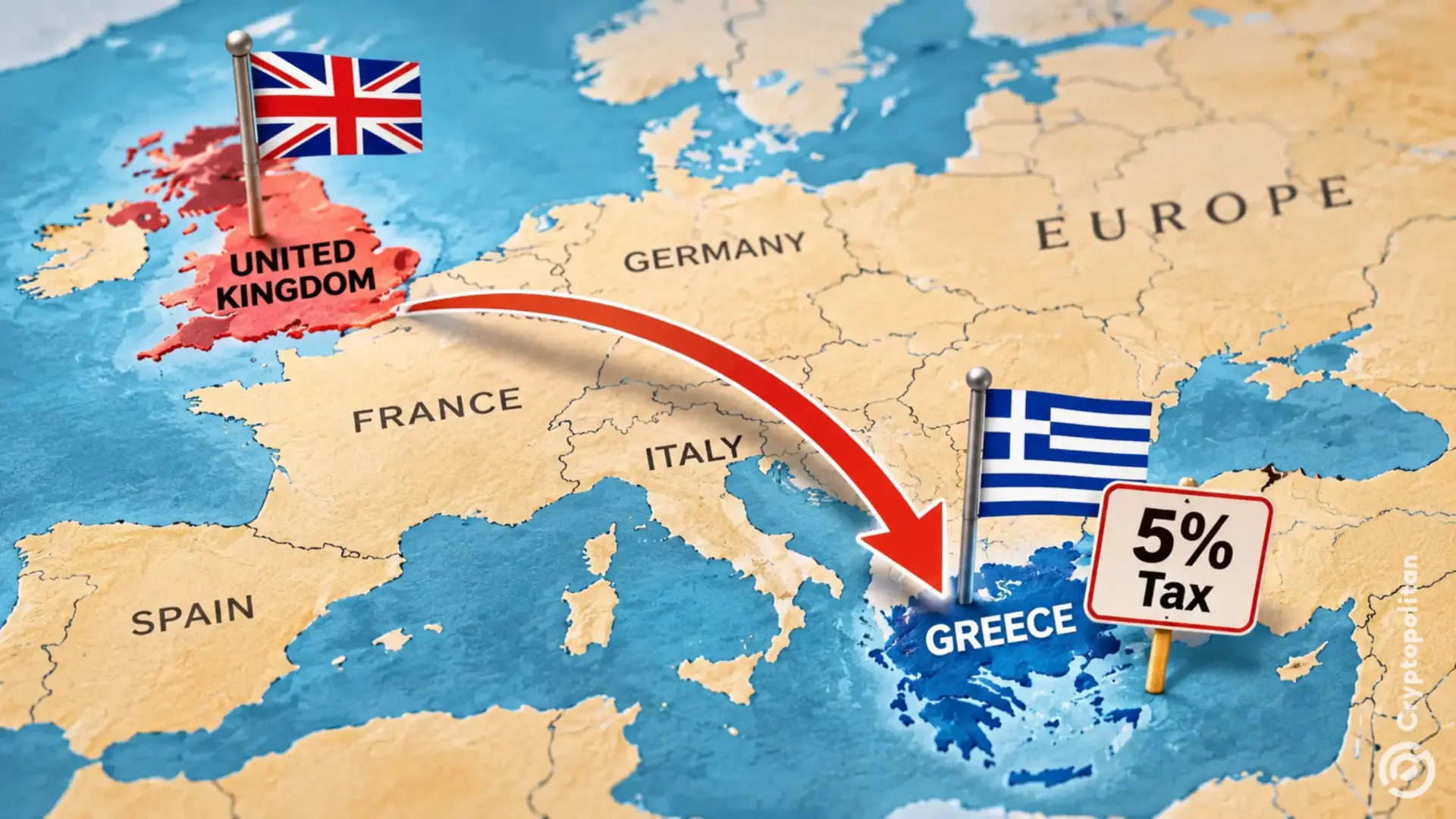
Nikos Stathopoulos, BC Partners’ chairman for Europe, is reportedly relocating from Britain to Greece, where the buyout firm plans to open an Athens office. The move comes as Greece introduces tax incentives to attract fund managers. The bigger question is whether these incentives will bring more private-equity investment into the country.
A relocation the firm frames as deals, not tax
Bankingnews.gr revealed Stathopoulos’ move as of November 5, referring to sources close to the matter as well as a corporate filing. It is noted that BC Partners supervises over $40 billion of funds and intends to collect more funds to invest in Greece.
According to a person familiar with BC Partners, the move was initiated due to specific business goals of the company and not due to any tax incentives from Athens. Neither Stathopoulos nor the company has commented on the issue.
BC Partners has already been investing in Greece through its investments in Pet City, a company specializing in pet retail, as well as Alphabet, which provides various education services. The establishment of its office in the Greek capital would improve its presence in the country, although the office itself is yet to be opened.
What Law 5313/2026 offers relocating managers
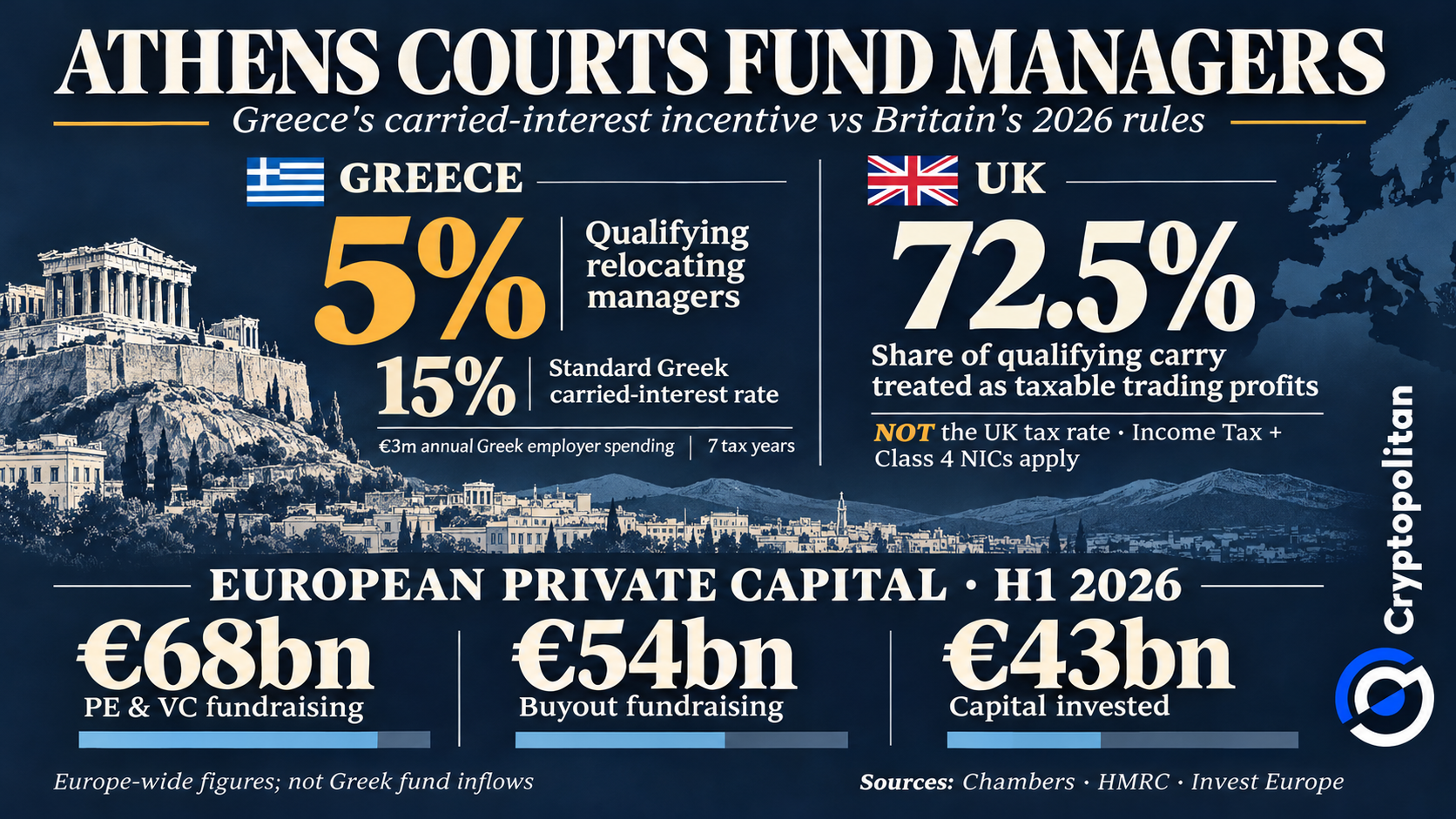
As per Greek Law 5313/2026, carried interest—an income share given to fund managers from investments—will be subject to taxation at the rate of 15%. However, managers meeting certain conditions who change their tax residence will be eligible for a reduced rate of 5% for the first seven years of their new tax residence, beginning from the year they apply.
There is one important condition, though, which is an annual expenditure obligation. The Greek employer of the manager has to incur at least €3 million in operational costs in Greece. A monthly expenditure of €250,000 will meet this requirement in a year. For shorter qualifying periods, the expenses will be prorated, EY says.
For managers to be eligible for the 5% carried interest tax rate in Greece, they must comply with employment and tax-residency regulations and submit an application via myAADE. In addition, the legislation provides another advantage for foreign funds qualifying under the scheme. The fact that managing funds from Greece does not, by itself, make the funds Greek tax residents.
Britain kept its carried-interest regime in place
The United Kingdom has been classifying carried interest as trading income subject to Income Tax and Class 4 National Insurance since April 6, 2026. The HMRC regulations stipulate that 72.5% of the eligible net profits is treated as taxable income. It has to be noted that this 72.5 is not a percentage rate; rather, it refers to the multiplication factor for determining how much taxable income will be reported. The UK government’s autumn budget of 2026 contained no new regulations concerning the taxation of carried interest.
As the UK’s carried-interest tax regulations stay in place, the new Greek incentives provide another option for those funds’ managers that think about moving elsewhere. According to reports, hedge-fund manager Chris Rokos has left the UK for Greece. His leaving has sparked interest in Athens, but it is still unclear whether other professionals will join him.
Fundraising favors Europe, but those flows are not Greek flows
European private equity and venture capital funds raised €68 billion in the first half of 2026, up 6% year on year. Buyout fundraising reached €54 billion, from €42 billion a year earlier. Yet actual investment fell 35% to €43 billion.
In a related survey, 43% of investors expected to increase European allocations because of US trade policy, while 30% expected to reduce US exposure. These are Europe-wide figures, not evidence of fresh fund inflows into Greece.
Binance’s Greek bet is a separate signal
Greece is drawing interest beyond private equity. Cryptopolitan reported that Binance sought a Greek license for EU expansion, citing talent and security.
Binance’s decision was unrelated to carried-interest taxes. Still, both developments point to Athens’ ambitions as a financial-services hub.
This story was originally published by Cryptopolitan. Read the original article.