Does xG Help Football Bettors? How Expected Goals Moves the Odds
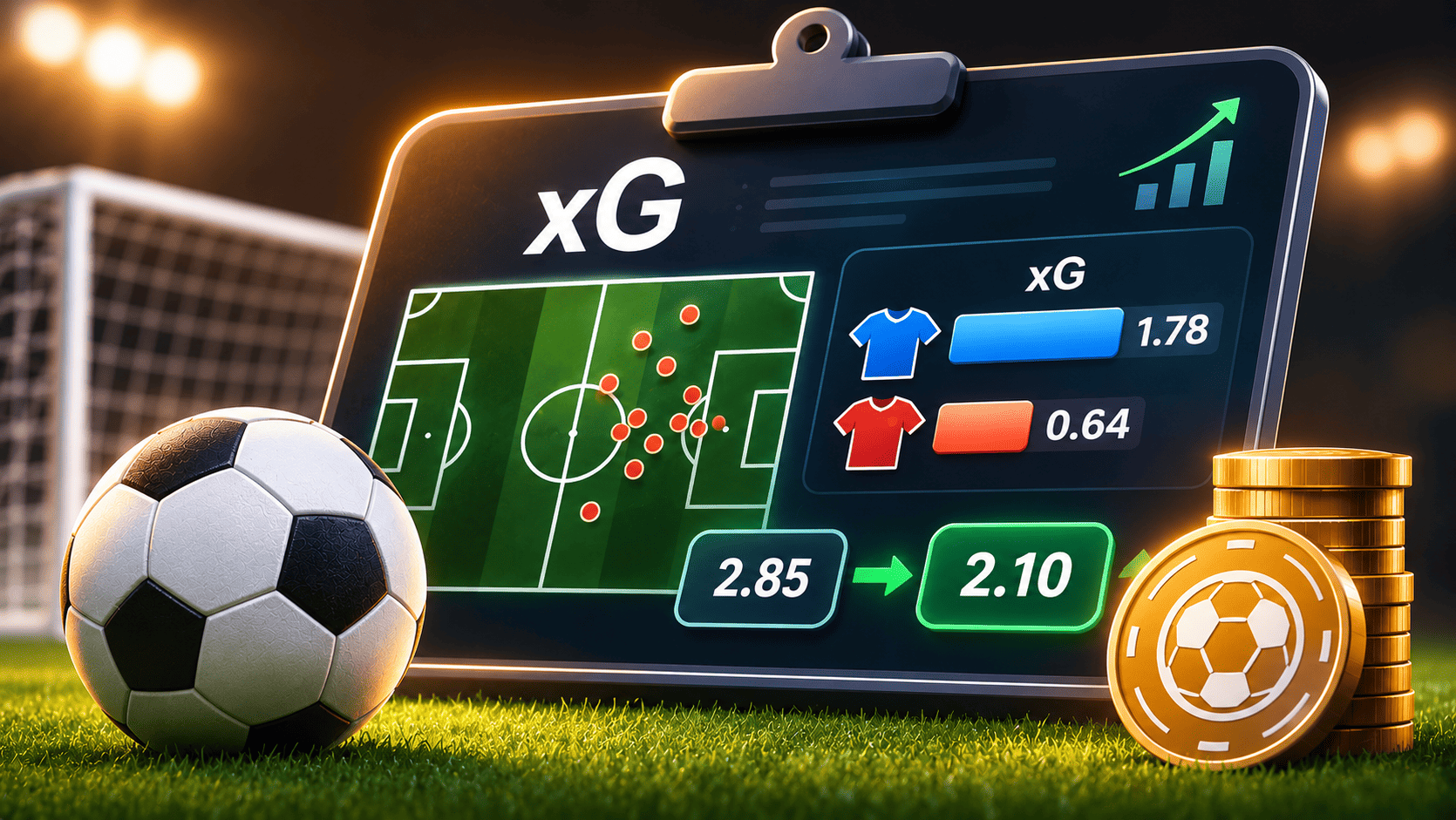
Expected goals, or xG, has moved from analysts' notebooks into television graphics and betting slips. The metric estimates how likely a chance was to become a goal, then adds those chances up to show which team created more.
Bettors use xG to spot teams that look better or worse than their results suggest. Bookmakers use the same data, so the edge it offers is smaller than many expect.
Here is what xG measures, how it feeds into football odds and where it can help or mislead bettors.
Chance Values in an xG Model
Every shot gets a value between 0 and 1, and the table shows how common situations compare.
Chance
Typical xG
What it suggests
Penalty
About 0.76
Scored roughly three times in four
Close-range tap-in
0.5 or higher
High-quality chance
Shot from inside the box
0.1 to 0.3
Moderate chance
Shot from 30 yards
About 0.03
Rarely scored
Last verified: November 2026
Stats Perform's model behind Opta data trains on nearly one million shots and weighs more than 20 variables, including distance, angle, defensive pressure and goalkeeper position.
How xG Moves the Odds
Bookmakers feed xG and related metrics into pricing models. Teams that keep winning despite weak xG may see their odds drift longer over time, as models expect results to move toward the underlying numbers.
Markets usually react more quickly than casual bettors, so bookmakers have often priced in a team's xG story by the time it reaches a match preview.
Where xG Can Mislead
Small samples distort xG. Small batches of matches can swing totals wildly, and elite finishers or goalkeepers can beat the numbers for long spells. Context such as red cards or game state also changes how teams shoot.
Sensible Ways to Apply xG
Season-long xG trends help more than single games, especially for spotting teams whose results and performances diverge. Team news and fixture context, paired with xG, give a fuller picture.
Goal markets reflect these patterns, and a look at goalscorer markets across Europe shows how player chances translate into prices.
Coverage of European football varies by book, as a comparison of European coverage explains.
Prices differ between platforms on the same match, and comparing Premier League odds at several books shows how much.
Dexsport's Football Data and Markets
Dexsport draws football statistics from whoscored.com first and flashscore.com second, and offers 39 football market types, including totals, Asian lines and player cards. Dexsport settles results against named sources such as premierleague.com and uefa.com.
Bettors who follow xG can apply it to totals and Asian handicap lines at Dexsport. Dexapp LTD holds the platform's Anjouan licence.
Conclusion
Expected goals measures the quality of chances, giving each shot a value between 0 and 1 based on factors such as distance, angle and pressure. Bookmakers use the same data, so they often price in xG trends quickly.
Season-long xG helps bettors spot teams whose results move ahead of or behind their performances, while small samples and elite finishers can mislead. Dexsport offers totals and Asian lines alongside named statistics sources.
Combine xG with team news before any bet. Betting law varies by country, so check yours, bet only at legal age and remember that KYC or AML checks may apply.
This story was originally published by CryptoDaily. Read the original article.