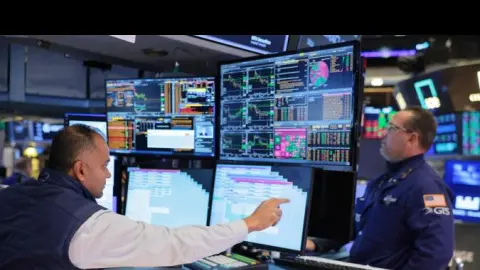
Steve Eisman Says He Will Never Buy BTC, and Bitcoin Is Down 20% This Month

Three Things to Know
- Big Short investor Steve Eisman said he would never buy Bitcoin, calling it a bet that simply tracks Nvidia.
- Daily momentum looks deeply oversold, yet sellers still control the trend.
- One floor below the current price may decide whether a relief bounce gets a chance.
Steve Eisman said Bitcoin is worth nothing and that he would never own it. He argued the coin fails as a hedge because it moves with chip stocks.
The timing stings. Bitcoin just chased a Nvidia rally and then lost every bit of it within a day, which fits his argument neatly. Traders now want to know whether oversold conditions can produce a real bounce or only a pause.
The Big Short Investor Calls Bitcoin Nothing
Eisman, who bet against subprime mortgages before 2008, made his case on Monday on The Diary of a CEO, the podcast hosted by Steven Bartlett.
He said crypto is worth nothing over the long run. In his view it fails as a hedge against government debt, a weak dollar or a market crash, because it trades in step with Nvidia and other tech stocks. "On days where Nvidia is up, crypto is up, and on days where Nvidia is down... crypto is down," he said. He called crypto "just a way of speculating about speculating."
Bartlett asked whether he would hold even a small position. "Never. Absolutely never," Eisman said. He did allow that stablecoins "might have some value" in payments. He also ruled out CoreWeave and called its founders "dishonest."
Retail sentiment on Stocktwits slipped to neutral from bullish, while Bitcoin topped the platform's trending crypto tickers. The coin is down about 20% this month.
A Nvidia Pop Fades Far Below the 50-Day Line
Bitcoin (BTC) daily price with the nearest support (green) and resistance (red). Source: TradingView
Monday gave Eisman a live demonstration. Nvidia closed up 31% after Jensen Huang was reappointed as chief executive. Bitcoin followed it higher and rose more than 5% to $64,446 on Nov 23.
The gain did not last a day. By Tuesday's Asian session the coin had slipped to about $59,400, erasing the entire move. That is the pattern Eisman described on the podcast.
Bitcoin now trades near $60,000, down about 2% over 24 hours. The week looks worse, with a loss of roughly 8%. Short bounces have not changed the direction.
A moving average smooths out daily swings to show the underlying trend. Bitcoin sits well below its 50-day average near $72,000. That line now acts as a ceiling, so any rally has to climb through traders eager to sell.
Higher still, the 200-day average sits near $75,000. A price under both lines usually marks a market where sellers set the tone. Buyers who bought in recent months are sitting on losses and may sell into strength to get out.
Bitcoin has dropped about 26% over 30 days, a sign of an established decline. One strong day for tech stocks was not enough to turn it.
Sellers Stay in Charge Despite Oversold Readings
RSI, a 0 to 100 gauge of momentum, has dropped to about 24 on the daily chart. Readings below 30 count as oversold. That tells beginners the selling has run hard and fast, perhaps faster than the news justifies.
Stretched markets often snap back, since sellers tend to pause after a slide this steep.
Oversold does not mean the bottom is in, though. The MACD, a tool that compares short and longer price trends, remains below its signal line. In plain terms, momentum is still pointing down.
Trend strength shows sellers driving a real decline. Strong downtrends can keep RSI pinned in oversold territory for days or even weeks. Buyers need more than a cheap-looking reading before they step in with conviction.
Why $55K Matters More Than Monday's High
The nearest floor sits around $55,000. On the daily chart, no mapped support appears below it. A clean break there would leave the price in open air, with no obvious level where buyers have gathered before.
That makes it the line that matters most this week. Holding it would give the oversold bounce traders expect a base to build on. Losing it would let sellers set the next target themselves.
Overhead, resistance stands near $65,000. That zone capped Monday's Nvidia-driven spike, and sellers met the rally there within hours. A close back above it would be the first real sign of repair.
Beyond that, the next ceiling lines up with the 200-day average.
Two Paths From Oversold Territory
Nvidia's next move will likely decide which of two setups plays out.
- Bullish: A daily close above the ceiling that capped Monday's spike would put the 50-day line in sight as the next target. Buyers would then have a real foothold. The setup fails if the price drops back under the round number it trades near today.
- Bearish: A close below the nearest floor would extend the slide into territory with no clear support. Sellers would keep control. A recovery above Monday's ceiling would cancel this view.
Bitcoin Has to Prove Eisman Wrong Above $65K
Until Bitcoin holds above the ceiling that turned back Monday's rally, the trend belongs to sellers. One good day for chip stocks lifted the price, and it could not keep it there.
The bigger risk sits in Eisman's own point. Bitcoin is tightly tied to tech shares, so a Nvidia selloff could drag it toward that key floor quickly.
This story was originally published by CryptoDaily. Read the original article.