Bridged XMR1 goes to zero, attacker sells on Hyperliquid
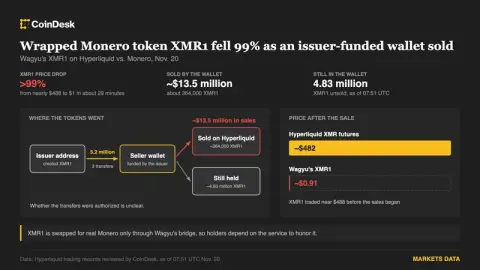
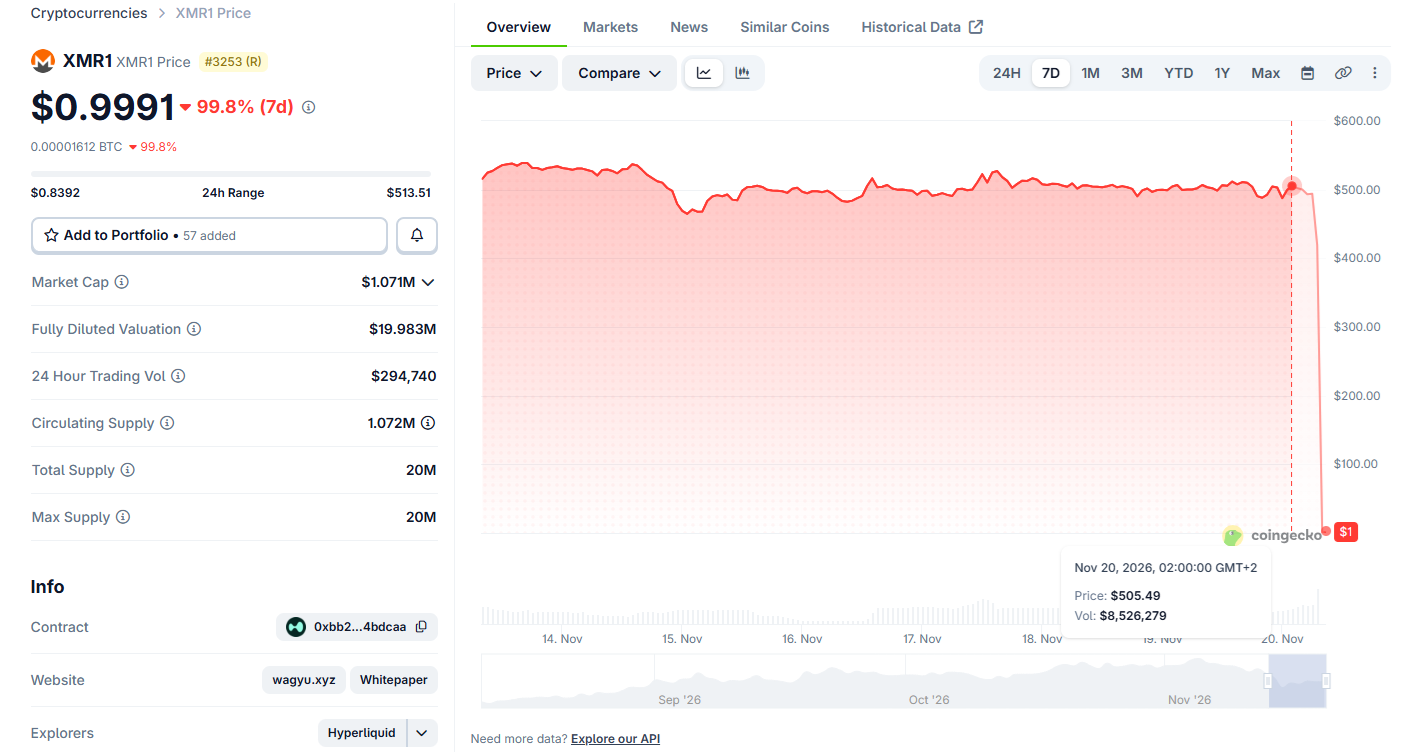
XMR1 crashed from around $500 to $0.99 in what appears to be a bridge exploit. Around 5.2M XMR1, a wrapped form of XMR, were sold on Hyperliquid, crashing the price in a 35-minute period.
XMR1 alerted on-chain analysts after crashing as low as $0.92 in around 35 minutes.
An exploit against XMR1, a bridged form of Monero’s privacy coin, happened early on November 20. On-chain analysis showed around 5.2M XMR1 were withdrawn directly from the deployer.
The attacker ran a test transaction for 10 XMR1, later withdrawing two tranches of 100K XMR1 and the biggest 5M XMR1 transfer.

XMR1 is a HIP-1 token, used to give traders access to Monero price action on Hyperliquid. The token was created by the PerpetualCow team, the pseudonymous social media handle behind XMR1 and the Wagyu project. This is the latest attack against PerpetualCow, following a data leak at the end of October.
The direct attack against the wallet is still investigated, as PerpetualCow has not explained how the deployer wallet was breached.
XMR1 moved immediately and swapped on Ethereum
The coins were then immediately moved through CoW Protocol and sold for USDC, which was later swapped for ETH. Switching to Ethereum is usually a way to access mixers, especially TornadoCash, in a style similar to previous hacks by DPRK attackers. The attack arrived just a day after analysts discovered an inflow of DPRK illegal funds into Sky Protocol.
Additionally, the XMR1 deployer wallet on Hyperliquid sent 5.2M XMR1 to a new address. That wallet then sold the coins on the open market for around $13.2M in USDC. It was precisely this transaction that caused XMR1 to crash from $494 to $0.99, erasing all liquidity from the Hyperliquid pair.
In the first hour after the hack, the Hyperliquid address kept selling small batches of XMR1, even at the minimal price of $0.99. Hyperliquid’s HIP-2 is the only market trading XMR1.
The new XMR1 exploit is one of the bigger DeFi hacks in November, which started off as a relatively slow month. The exploit also shows bridges are still a risk, with the potential to mint unbacked tokens that then drain real existing liquidity.
Was the XMR1 backed by real Monero?
On-chain analysts noted the XMR1 withdrawn was probably not backed by real Monero (XMR). Analyst @darth_imposer explained that all 20M XMR1 were created at once by Wagyu’s deployer wallet.
The attacker then called the deployer and started receiving XMR1, all consolidated in a single address, used for both storing and swapping.
The Wagyu deployer address still holds 13.4M XMR1, which were held as a reserve and not released to the market. According to analysis, Monero users showed no evidence of depositing $2B in funds to back the XMR1.
Users were urged not to bridge any more XMR through the Wagyu bridge until the nature of the exploit is made clear and there are no more risks of draining the remaining XMR1.
XMR slides on centralized markets, Hyperliquid
In total, the Hyperliquid market for Monero carried around $77M in open interest as of November 10. While XMR1 crashed to zero, the XMR market remained relatively unaffected.
XMR on centralized exchanges only slid by 5.9% in the past 24 hours, within its usual range of fluctuation. The asset traded around $474.
On Hyperliquid, XMR traded in a similar range, at around $475 based on oracle pricing. For now, the XMR1
The issue with the latest hack is the potential to undermine trust in Hyperliquid’s Monero trading. The loss for now only affected direct XMR1 holders, such as liquidity providers, traders, and the bridge operator.
Since most XMR1 was held in reserve and not released, the contagion may be limited. It remains uncertain if XMR1 can recover, even if traders buy at the anomalous $1 price. Following the exploit, the market practically had zero liquidity for XMR1. While the exploiter left with $13.2M in value, the total attack erased $2B in notional value from the XMR1 market, along with temporary losses for Monero.
This story was originally published by Cryptopolitan. Read the original article.